English
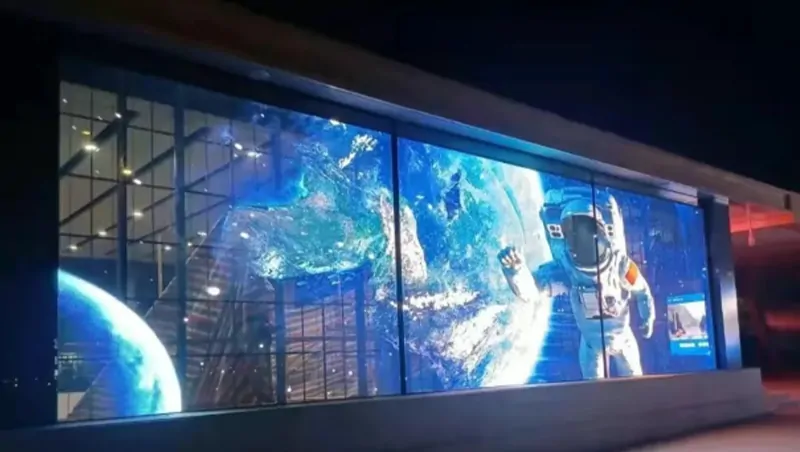
Picture this — you've just landed a contract to install a massive LED display on the side of a commercial building downtown. The client wants something visible from three blocks away, weatherproof, and running 24/7 without a hitch. You open your browser, type "outdoor led video wall panel manufacturers" into Google, and suddenly you're staring at hundreds of results. Every single one claims to be the best. Every spec sheet looks copy-pasted. And deep down, you know that picking the wrong supplier on this one could cost you tens of thousands in replacements, not to mention your reputation.
I've been in this exact position more times than I care to admit. Over the past several years, I've sourced outdoor LED panels for everything from highway billboards in Texas to stadium perimeter displays in Germany. The learning curve was steep, expensive, and honestly a little embarrassing at times. But here's the thing — most of the mistakes I made were preventable. They came from not knowing what questions to ask, not understanding which specs actually mattered in real-world conditions, and trusting marketing materials over test reports. So let me lay out everything I wish someone had told me before I placed my first bulk order.
Indoor LED displays and outdoor LED displays might look similar on a spec sheet, but the engineering differences run deep. When you put a panel outside, it gets hammered by conditions that would never occur in a climate-controlled lobby.
Here's what outdoor panels have to survive:
Direct solar radiation — surface temperatures can hit 70–85°C on a hot summer day. Internal component temperatures run even higher without proper thermal design.
Sustained rainfall — not a light drizzle, but hours of driving rain at an angle. IP65 is the minimum, and in coastal or tropical regions, IP66 is the safer call.
UV degradation — constant ultraviolet exposure breaks down plastics, yellows polycarbonate face masks, and deteriorates silicone sealants over time.
Thermal cycling — panels expand in daytime heat and contract at night. Over thousands of cycles, this stresses solder joints, cabinet seams, and connector interfaces.
Wind pressure — a large outdoor display catches wind like a sail. Structural integrity of both the panels and the mounting system is non-negotiable.
This is why outdoor-rated panels cost more than indoor ones. The extra engineering — conformal-coated PCBs, UV-stabilized materials, higher-brightness LED chips, robust power supplies with wider operating temperature ranges — all adds up. When a manufacturer quotes you a price that seems too close to their indoor panel pricing, that should raise an eyebrow.
This question comes up constantly, and for good reason. The LED display industry in China has a layered supply chain. At the top, you have companies that design and manufacture everything in-house. Below them, integrators who buy modules and cabinets from various sources and assemble them under their own brand. And then there are pure trading companies that have never touched a soldering iron.
Here's how I separate them:
Request a real-time video call — not a polished promotional video, not a pre-recorded walkthrough. Ask to see the SMT line that's running today. Ask them to point to the aging room where panels are being burned in right now. A genuine manufacturer will have no problem with this. They'll probably be proud to show you their operation. A middleman will stall, make excuses about "production being busy today," or redirect you to a virtual tour link.
China's enterprise registration system is publicly accessible. Look up the company and check their registered business scope. If it says "LED display trading" or "electronics wholesale" rather than "LED display manufacturing" or "LED display production," you're likely dealing with a reseller. This doesn't automatically mean they're bad — some integrators do excellent work — but you should know who you're actually talking to and price accordingly.
A company that offers indoor panels, outdoor panels, rental panels, fine-pitch displays, transparent screens, floor tiles, and flexible mesh displays — all under one roof — is almost certainly not manufacturing everything themselves. Real factories tend to specialize. They might do outdoor fixed installation really well but not touch rental products at all. A focused product range is actually a good sign of manufacturing depth.
When you're importing outdoor LED video wall panels into North America or Europe, certifications aren't a nice-to-have — they're the difference between your shipment clearing customs smoothly or getting held at the port for weeks. Let me break down what matters:
| Certification | Target Market | What It Covers |
|---|---|---|
| ETL or UL Listed | USA & Canada | Electrical safety — often required by local building inspectors for permanent outdoor installations |
| FCC Part 15 Class A | USA | Electromagnetic emissions compliance for commercial/industrial equipment |
| CE (EN 62368-1 + EN 55032) | EU/EEA | Safety + EMC combined directive for audiovisual and information technology equipment |
| IP65/IP66 Test Report | Global | Verified ingress protection against dust and water — must come from an accredited lab |
| RoHS + WEEE | EU & UK | Restriction of hazardous substances + end-of-life recycling compliance |
| ISO 9001 | Global | Quality management system certification — indicates consistent production processes |
Here's something I learned the hard way: "CE certified" is not a single thing. CE is an umbrella marking that covers multiple directives. A manufacturer might have CE for Low Voltage Directive compliance but nothing for EMC. Or they might have self-declared CE conformity without any third-party testing at all. Always ask for the actual test report from a recognized laboratory — TÜV, SGS, Intertek, or Bureau Veritas. If they can't produce one, the certificate is essentially meaningless.
For North American projects, ETL listing from Intertek or CSA Group carries real weight with electrical inspectors. It means a Nationally Recognized Testing Laboratory has physically tested your product against UL standards. Some municipalities won't sign off on a permanent outdoor installation without it.
Let's get into the numbers because this is where expectations and reality tend to collide. I've tracked pricing across multiple manufacturers, order volumes, and specifications over the years. Here's what the market looks like for outdoor LED video wall panels:
| Order Volume | Price per sqm (USD) | What You're Getting |
|---|---|---|
| 1–5 sqm | $2,000–$3,200 | Sample or small signage projects |
| 5–20 sqm | $1,500–$2,400 | Restaurant exteriors, small billboards, retail facades |
| 20–60 sqm | $1,100–$1,700 | Building-mounted advertising, medium venue exteriors |
| 60–150 sqm | $850–$1,300 | Highway billboards, large commercial installations |
| 150+ sqm | $650–$1,000 | Stadium screens, major infrastructure projects |
These figures are based on common outdoor pixel pitches — P3.91, P4.81, P5.95, and P6.25 — with standard 5,000–6,500 nit brightness. If you need finer pixel pitches like P2.6 or P2.9 for outdoor (which is becoming more common for premium retail and hospitality), add 40–60% to the numbers above.
Factors that push pricing up:
LED chip brand — Nationstar and Kinglight are the mainstream tier. Cree and Nichia are premium and add 15–25% to cost, but their color stability over 5+ years is noticeably better
Brightness level — jumping from 5,000 to 8,000 nits requires more LEDs per module and heavier-duty power delivery
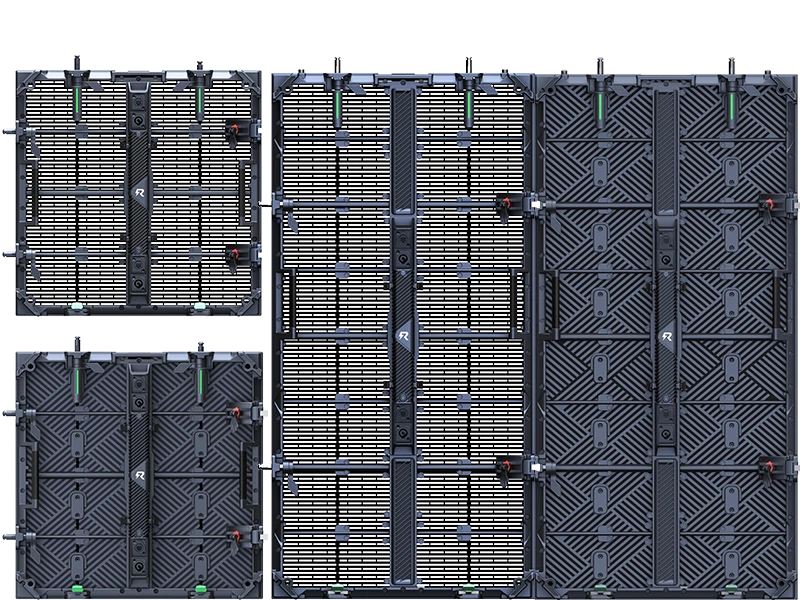
Cabinet material — die-cast aluminum costs more than stamped steel but is lighter, more precise, and dissipates heat more effectively
Refresh rate — 3,840Hz panels cost 10–15% more than 1,920Hz versions
Front vs. rear service — front-maintenance designs with magnetic modules add to the unit cost but save on installation depth and long-term servicing
Factors that bring pricing down:
Larger order volumes (the per-sqm cost drops significantly past 50 sqm)
Standard cabinet sizes (500×500mm or 960×960mm) vs. custom dimensions
Accepting the manufacturer's standard LED chip and driver IC selection rather than specifying premium brands
When someone quotes you $350/sqm for an outdoor P4.81 panel, something is seriously wrong. At that price, they're using the absolute cheapest LEDs available, skipping aging tests entirely, and probably overstating the IP rating. The panel might work fine for a month. Then the color starts shifting, modules start dying, and you're left holding the bag.
Spec sheets can be overwhelming. Every manufacturer lists dozens of parameters, and they all look impressive on paper. Let me focus on the ones that genuinely determine whether your outdoor installation performs well and lasts long.
For outdoor applications, 5,000 nits is the floor. Anything below that and your content becomes washed out and unreadable in direct sunlight. For south-facing installations in sunny climates, highway billboards, or tropical locations, you'll want 7,000–8,500 nits. In extreme high-radiation environments — equatorial regions, unshaded desert installations — 8,500–10,000+ nits becomes necessary.
But brightness comes with a trade-off. Higher nits means more power draw and more heat. This is where automatic brightness sensors earn their keep. They reduce output during overcast days and nighttime hours, which can cut energy consumption by 30–40% annually. Some cities actually require brightness curfews for outdoor displays — Paris caps luminance at 5,000 nits during the day and 500 nits at night.
If there's any chance your outdoor display will be filmed — by tourists, by media, by the client's own marketing team — you need 3,840Hz minimum. Below that threshold, camera footage shows visible scan lines and flickering that makes the content look broken. For static signage where nobody's pointing a camera, 1,920Hz is fine and saves money.
Here's what most buyers don't realize — when an outdoor panel sits in direct sunlight, internal cabinet temperatures can reach 65–80°C. That's hot enough to degrade LED phosphor, throttle driver ICs, and shorten power supply lifespan dramatically.
What to look for in a manufacturer's thermal design:
Die-cast aluminum cabinets — the material acts as a heatsink, passively pulling heat away from internal components
Internal temperature sensors with automatic brightness reduction or shutdown protection when thresholds are exceeded
Smart fan systems with replaceable dust filters — not just open ventilation holes that let rain and insects inside
Conformal coating on all PCBs to prevent moisture-related corrosion and short circuits
I once had a batch of panels that performed flawlessly during factory testing at 25°C ambient. Three months into a Texas summer, with internal temps pushing 75°C, the power supplies started failing one by one. The manufacturer had never tested their design at real-world extreme temperatures. That project ended up costing me an extra $12,000 in emergency power supply replacements and labor.
Choosing the right pixel pitch depends on your minimum viewing distance:
| Pixel Pitch | Ideal Viewing Distance | Typical Application |
|---|---|---|
| P2.6–P2.9 | 3–15 meters | Premium retail facades, hospitality, close-range advertising |
| P3.91 | 4–20 meters | Building-mounted displays, stage backdrops, medium-range signage |
| P4.81 | 5–25 meters | Highway-adjacent billboards, large venue exteriors |
| P5.95–P6.25 | 6–30 meters | Stadium perimeter, large-scale commercial advertising |
| P8–P10 | 10–50+ meters | Highway billboards, rooftop installations, long-distance viewing |
The rough formula: minimum comfortable viewing distance (in meters) ≈ pixel pitch (in mm) × 1,000. So P3.91 looks sharp from about 4 meters onward.
Let me share a few lessons that cost me real money and real stress.
A 40-sqm outdoor LED wall mounted on a building facade catches wind like a billboard — because it basically is one. In a 100 km/h gust, the lateral force on that surface area is enormous. I had an installation where the mounting frame — designed by the building owner's contractor, not by anyone who understood LED panel weights — started flexing visibly during a storm. We ended up reinforcing the entire structure after the fact, which cost nearly as much as the display itself.
Always involve a structural engineer. Always get accurate weight data from your manufacturer — including fully loaded cabinets with power supplies, receiving cards, and cabling. Not just the bare shell weight.
A 25-sqm outdoor P3.91 wall running at 6,500 nits can draw 15–20 kW at peak brightness. That's a serious electrical load. It needs dedicated circuits, properly sized wiring, and in many cases, coordination with the building's electrical engineer. I've had displays sit in storage for weeks because the site's electrical system couldn't support them without upgrades nobody had planned for.
This one seems obvious but you'd be surprised how often it gets skipped. Before mounting anything at height, assemble a representative section of your wall on the ground. Run it for 48–72 hours minimum. Check every cabinet for dead pixels, color uniformity, brightness consistency, and physical fitment. Finding a defective module on the ground takes 10 minutes to swap. Finding it after the panel is 12 meters up on a building facade takes a scissor lift, a crew, and a lot of cursing.
LED chips shift in color and brightness as they age. If you need to replace a module three years after installation, a brand-new module from a fresh production batch will look visibly different from the surrounding panels. Always order 6–10% spare modules from your original production batch. Store them in a climate-controlled space. They'll be exact color matches when you need them.
This question comes up in almost every project I work on. The answer is straightforward once you define the use case.
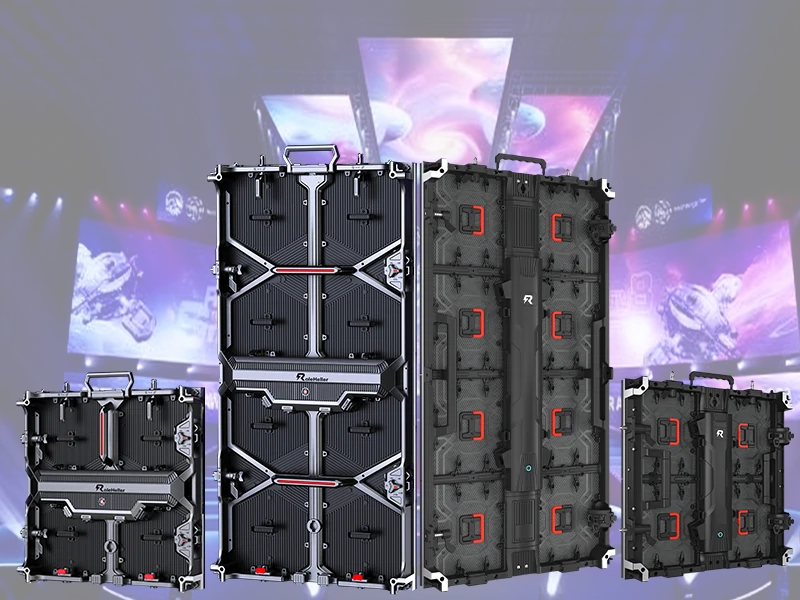
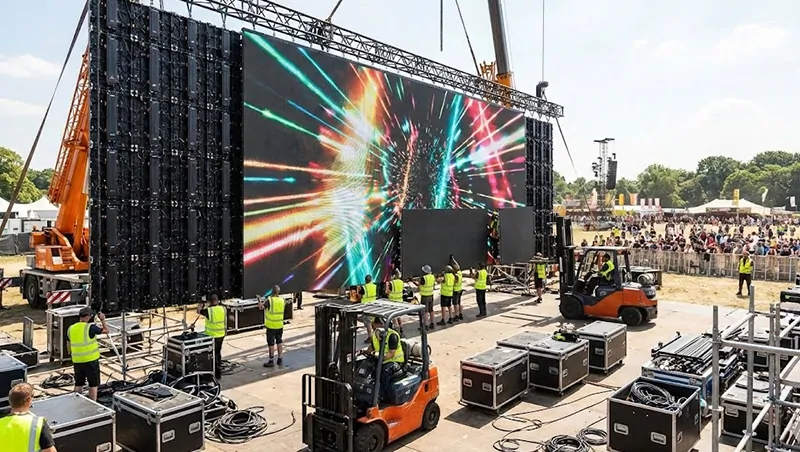
Rental outdoor LED panels are engineered for repeated setup and teardown. They feature quick-lock mechanisms between cabinets (tool-free assembly in most cases), ruggedized connectors rated for hundreds of connection cycles, and flight case packaging for transport. The cabinets are typically die-cast aluminum for a balance of strength and weight. You're paying a 25–35% premium over fixed-install panels, but for events, festivals, touring shows, and temporary advertising campaigns, that flexibility is worth every dollar.
Fixed outdoor LED panels are designed to go up and stay put for years. They can be thinner, sealed more aggressively, and equipped with passive cooling designs that don't require service access panels. They don't need the reinforced connectors or quick-lock hardware that rental cabinets require, which brings the cost down. For building-mounted advertising, permanent stadium screens, fixed roadside billboards, or architectural installations — go with fixed panels.
Your LED panels are only as good as the system driving them. The control system landscape for outdoor LED displays has a few dominant players:
NovaStar holds the largest global market share. Their processors — the MCTRL660 Pro for smaller setups, the VX600 and VX1000 for mid-to-large installations — handle 4K input, support per-panel color correction, and offer remote monitoring. Most Chinese LED manufacturers optimize their receiving cards for NovaStar compatibility. If you're unsure which control system to spec, NovaStar is the safe default.
Colorlight is a strong competitor, especially for larger-scale installations. Their A-series processors scale well and offer competitive pricing. Some manufacturers include Colorlight receiving cards as standard equipment.
Brompton occupies the premium tier. Their Tessera SX40 processors are the choice for broadcast-quality outdoor installations — major sporting events, high-profile retail flagships, any scenario where color accuracy and processing latency need to be absolutely flawless. You'll pay more, but the image quality difference is tangible.
For the vast majority of commercial outdoor applications, NovaStar provides the best balance of features, reliability, and ecosystem support. Their NovaLCT software handles configuration, calibration, and network monitoring from a single interface.
Production timelines vary based on complexity and volume:
Standard models in stock: 5–10 business days
Custom configurations (specific brightness, refresh rate, cabinet color, logo printing): 15–25 business days
Large projects (100+ sqm with custom requirements): 25–45 business days
For international shipping:
Sea freight (FCL) — 25–35 days to US West Coast, 30–45 days to Northern Europe. This is the default choice for full project orders. Outdoor panels are heavy and dense, making air freight prohibitively expensive for anything beyond sample quantities.
Air freight — 5–8 days. Reserve this for urgent spare parts, last-minute replacements, or sample orders. Expect to pay 4–6x the sea freight rate per kilogram.
Express courier (DHL, FedEx, UPS) — 3–5 days. Only practical for individual modules or small components under 30 kg.
One thing I cannot emphasize enough — packaging. Outdoor LED panels have glass-front modules with exposed LED chips. They need reinforced wooden crates with custom-cut foam inserts, not cardboard boxes. I've had two separate shipments arrive with cracked modules because suppliers cut corners on packaging to save a few dollars. Each time, the replacement modules cost 10x what the "savings" were and delayed the project by two to three weeks.
The payment terms a manufacturer offers tell you a lot about their confidence in their own product. Standard arrangements in the industry:
30% deposit + 70% before shipment — the most common structure for buyers with some order history
100% irrevocable L/C at sight — typical for orders exceeding $50,000, provides bank-level protection for both parties
Alibaba Trade Assurance — strongly recommended for first-time orders. Your payment is held in escrow and released only when you confirm the goods match the agreed specifications
For your first one or two orders with any new manufacturer, lean heavily toward Trade Assurance or a comparable escrow service. It gives you genuine leverage if the delivered product doesn't match the sample or the agreed-upon specs. After you've completed a few successful transactions together, you can negotiate more flexible terms like net-30 or open account arrangements.
Get everything in writing — a detailed proforma invoice covering product model numbers, quantities, unit prices, total amount, delivery timeline, warranty terms, and penalty clauses for late delivery. A casual email exchange or a verbal agreement over WeChat is not a contract, and it won't protect you if things go wrong.
Outdoor LED displays are a multi-year investment. A well-maintained installation should perform reliably for 7–10 years. Your warranty and after-sales support structure needs to reflect that timeline.
Standard warranty terms from most outdoor LED video wall panel manufacturers cover 2–3 years on LED chips, driver ICs, power supplies, and receiving cards. Some premium manufacturers push 5 years. But the specific terms matter as much as the duration:
Does the warranty cover replacement parts only, or does it include shipping costs for the replacements?
What's the guaranteed response time for a warranty claim — 24 hours? 48 hours? A week?
Will they provide remote technical support for troubleshooting, or do they expect you to figure it out?
Do they maintain spare parts inventory for your specific model for years after your order ships?
How long after your purchase can you still order exact-match replacement modules from the same production lineage?
A manufacturer who answers these questions clearly and puts the commitments in writing is one worth building a relationship with. One who waves it off with vague reassurances about quality — that's your signal to keep looking.
After sourcing outdoor LED panels for installations across multiple continents, I've come to a pretty clear conclusion: the cheapest quote is almost never the cheapest outcome. A panel that fails after 18 months costs you the replacement hardware, the labor to swap it at height, the downtime while your display sits dark, and the credibility hit with your client. Add it all up and the "savings" from going with the lowest bidder evaporate fast.
The manufacturers worth partnering with are the ones who answer your technical questions in detail, provide real third-party test reports instead of glossy marketing PDFs, and aren't afraid to push back when a spec request would compromise reliability. They might not be the cheapest option on the spreadsheet, but they're the ones who let you sleep well after your installation goes live and the first storm rolls through.
If you've been through the process of sourcing outdoor LED video wall panels — whether it went smoothly or turned into a cautionary tale — I'd genuinely like to hear about it. Your experience could save another buyer from making the same costly mistakes.
Q1: What pixel pitch should I choose for an outdoor LED video wall?
The right pixel pitch depends on your minimum viewing distance. P3.91 is the most versatile choice for 4–20 meter viewing distances, covering building facades, retail exteriors, and medium-range advertising. P4.81 to P6.25 works well for highway billboards and large venue installations where viewers are 6–30 meters away. For premium close-range applications like luxury retail or hospitality, P2.6 to P2.9 delivers sharper imagery at a higher cost per square meter.
Q2: How bright does an outdoor LED video wall need to be?
A minimum of 5,000 nits is required for content to remain readable in direct sunlight. For south-facing installations, tropical climates, or highway billboards, 7,000–8,500 nits ensures visibility under the harshest conditions. In extreme high-radiation environments like equatorial regions, 8,500–10,000+ nits may be necessary. Automatic brightness sensors are highly recommended to reduce energy consumption during nighttime and overcast conditions.
Q3: What is the expected lifespan of outdoor LED video wall panels?
Quality outdoor LED panels from reputable manufacturers typically last 80,000–100,000 hours, which translates to approximately 9–11 years of continuous 24/7 operation. Actual lifespan depends on LED chip quality, thermal management design, environmental conditions, and maintenance practices. Well-maintained installations in moderate climates frequently exceed 10 years of reliable service.
Q4: What IP rating do outdoor LED panels require?
IP65 is the minimum acceptable rating for outdoor LED displays, meaning the cabinet is fully sealed against dust ingress and can withstand low-pressure water jets from any direction — effectively simulating heavy rain. For coastal installations, areas with typhoon exposure, or locations requiring high-pressure washdown for cleaning, IP66 provides additional protection against powerful water jets at 100 liters per minute.
Q5: How much do outdoor LED video wall panels cost per square meter?
Wholesale pricing ranges from $650 to $3,200 per square meter depending on order volume, pixel pitch, brightness level, cabinet material, and LED chip brand. For standard P3.91 to P4.81 outdoor panels in medium-volume orders (20–60 sqm), expect to pay $1,100–$1,700 per sqm. Finer pixel pitches like P2.6 outdoor and higher brightness levels push pricing toward the upper end of the range.
Q6: Can outdoor LED video walls handle extreme cold and heat?
Quality outdoor LED panels are rated for operating temperatures from -20°C to +50°C ambient. Internal components — LED chips, driver ICs, and power supplies — are selected and tested for these extremes. In environments where ambient temperatures regularly exceed 45°C, additional thermal management measures such as enhanced ventilation, active cooling systems, or sun shields may be necessary. Always confirm the manufacturer's specified operating temperature range matches your local climate data.
Q7: What control systems work with outdoor LED video wall panels?
NovaStar is the most widely supported control system brand globally, with processors like the MCTRL660 Pro, VX600, and VX1000 offering robust outdoor performance and broad manufacturer compatibility. Colorlight A-series processors are a strong alternative for larger installations. Brompton Tessera processors serve the premium segment where broadcast-quality color accuracy and minimal processing latency are critical requirements.
Q8: Do I need permits to install an outdoor LED video wall?
In most jurisdictions, yes. Outdoor LED displays typically require building permits, electrical permits, and in many municipalities, specific signage or advertising permits from local planning authorities. Some cities have regulations governing maximum brightness levels, operating hours, and content restrictions for outdoor electronic displays. Always check with your local building department and planning authority before finalizing your installation plans.
Q9: How do I maintain an outdoor LED video wall?
Regular maintenance includes cleaning the display surface every 2–3 months to remove dust, pollen, bird droppings, and airborne pollutants that reduce brightness and cause hot spots. Inspect cabinet seals and gaskets annually for cracking or degradation. Monitor internal temperatures during peak summer months to verify cooling systems are functioning within spec. Check for dead or dimming pixels and replace affected modules promptly. Most manufacturers recommend a comprehensive professional inspection at least once per year.
Q10: What is the difference between front-service and rear-service outdoor LED panels?
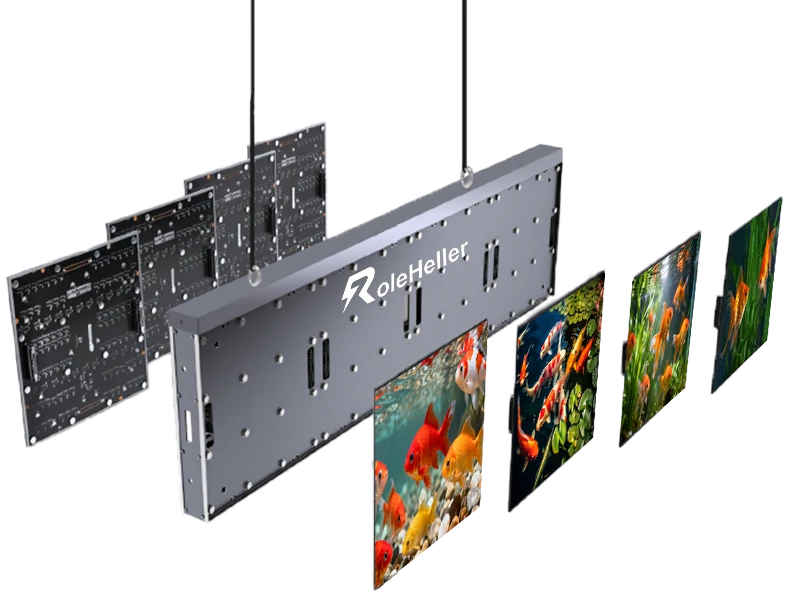
Front-service outdoor panels use magnetic modules that can be removed from the front of the cabinet without accessing the rear, enabling wall-flush installation with minimal depth behind the display — typically 80–120mm. This is ideal for building-mounted installations where rear access is impossible. Rear-service panels require 600–800mm of clearance behind the cabinet for maintenance access but offer easier component-level repair and are commonly used in freestanding, pole-mounted, or bridge-mounted configurations where rear access is available.